
Ready to Reimagine What’s Possible? Get in touch today

Government & Public Sector Digital Solutions
Government Digital Transformation Is More Than Building Software.
We don’t just hand over a system. We help the institution transition into it.
Successful public-sector implementation means bringing procurement, policy, data responsibility, administrative procedures, staff accountability, training, technology and long-term continuity together in one workable programme.
Since 2005Open TechnologiesLocal Data OptionsTraining-Led Adoption

Public-Sector Track Record
Delivered For Sri Lankan Public Institutions.
Cyclomax has worked with national and provincial institutions since 2009 — and with international partners such as JICA — on systems that remain in daily operational use.



Since 2009Delivering public-sector systems
20 harboursCovered by the CFHC harbour program
JICACollaboration on the National Water Board project
3 languagesEnglish, Sinhala and Tamil delivery
Why Government Is Different
A Public-Sector System Is an Institutional Change Project.
Government implementations operate inside established rules, approval structures, accountability frameworks, procurement conditions and long-term staffing realities. Software is only one part of the work.
Formal Administrative Processes
Existing documents, circulars, registers, approvals and responsibilities cannot simply be removed because a system can digitize them.
Accountability by Design
Users must understand what each digital action means, what becomes auditable and where responsibility sits.
People & Continuity
Regular transfers, promotions and staff changes mean the system must outlive the original implementation team and original users.
“
Technology can digitize a process. Only the institution can authorize how that process should operate.
Our role is to identify the gaps, support the transition and configure the approved workflow — not bypass policy.
PolicyResponsibilityTrainingContinuity
Five Implementation Pillars
A Government Project Has to Work Across More Than Technology.
We structure the implementation around five connected responsibilities.
Compliance
Translate tender conditions, licensing expectations, data requirements, security and contractual obligations into the delivery plan.
- Tender compliance matrix
- Open-source licence obligations
- Data-residency requirements
- Security and audit conditions
- Acceptance and warranty terms
- Documentation commitments
Compliance decisions are carried into architecture, agreements, implementation milestones and acceptance testing.
01 — Compliance
Tender requirements, licensing, data residency, procurement and contractual obligations.
ExploreProcess
Map the real administrative process before configuring the digital workflow.
- Current-state mapping
- Approvals and delegations
- Paper/document dependencies
- Department handoffs
- Exception scenarios
- Future-state workflow
Process design connects operational reality with approved policy and system configuration.
02 — Process
Understand existing procedures, approvals, documents and institutional responsibilities.
ExploreTechnology
Engineer the solution around security, integration, maintainability, performance and deployment constraints.
- Application architecture
- System integrations
- Data migration
- Access control
- Local/on-premise deployment
- Auditability and reporting
Technology supports the approved process instead of defining policy by itself.
03 — Technology
Architecture, development, integrations, infrastructure, security and data.
ExplorePeople
Prepare officers to use the system confidently and understand the responsibility attached to each action.
- Role-based training
- Scenario practice
- Management awareness
- Administrator training
- Train-the-trainer
- Refresher programmes
Training is planned as part of implementation, UAT, go-live and long-term continuity.
04 — People
Change management, training, responsibility, confidence and knowledge transfer.
ExploreContinuity
Make the system sustainable when staff, procedures, integrations and technology change over time.
- Staff-transfer continuity
- New-user onboarding
- System documentation
- After-sales support
- Enhancement process
- Knowledge retention
Continuity is designed for the institution, not only for the original project team.
05 — Continuity
Support, staff transfers, documentation, system evolution and long-term ownership.
Explore
Procurement & Tender Alignment
Built Around the Procurement Process — Not Outside It.
Government projects operate under formal tender specifications, contractual milestones and acceptance criteria. These requirements need to shape the project from the beginning.
- Technical specification compliance
- Commercial & contractual terms
- Open-source licensing obligations
- Source-code handover terms
- Data ownership
- Hosting responsibility
- Change-request procedure
- Acceptance & UAT criteria
- Training commitments
- Warranty / after-sales service
Contractual clarity matters: the agreement should make deliverables, ownership, acceptance, training, warranty, support and change procedures clear before implementation progresses.
Tender-to-Go-Live Control
StructuredTender Scope
Compliance
Agreement
Milestones
UAT
Training
Go-Live
Warranty
Government implementation starts with contractual clarity and continues through acceptance, training and operational support.
Data, Licensing & Ownership
Built on Open Technologies. Designed for Institutional Control.
Where a tender or institutional policy requires data to remain within the country, the deployment can be designed accordingly — including approved local infrastructure, local data centres, on-premise environments or other permitted architecture.
Open Technology Compatibility
Use proven open technologies and comply with applicable licence obligations when required by the tender.
Source-Code & System Handover
Customized source code, database, deployment details and technical documentation can be handed over according to agreed terms.
Data Residency Ready
Architecture can be aligned to approved in-country, on-premise or institutional hosting requirements.
Practical Ownership
The Institution Should Understand the System It Owns.
Ownership is more than a clause in the contract. The institution needs enough knowledge and documentation to operate, govern and evolve the system.
- Application source code
- Database structure
- Deployment documentation
- Configuration records
- API documentation
- Administrator manuals
- User manuals
- Backup procedures
- Recovery procedures
- Technical knowledge transfer
Built for the Institution. Controlled by the Institution.
Paper-to-Digital Transition
Digitization Is Often a Transition — Not a Switch.
Some processes may still require original documents, signatures, registers or physical evidence. The project has to identify those obligations and establish an authorized way to move forward.
Current Process
Paper-based procedures, registers, physical signatures and manual approvals.
Existing RequirementControlled Hybrid Transition
Paper + digital where necessary while roles, approvals and policy are aligned.
Transition StateAuthorized Digital Process
Digital-first workflow where the institution has formally approved the new procedure.
Approved Future StateBefore changing the workflow, establish:
- Which physical documents remain mandatory
- Which records can become digital
- What evidence auditors require
- Which approvals need originals
- Who authorizes procedural change
- How records must be retained
Our principle: We do not remove a government procedure just because software can replace it. We identify the conflict, support the responsible authority in defining the approved future process, and configure the system accordingly.
Training & Change Management
Training Is Part of the Implementation — Not an Activity After Development.
Government officers need to understand both how to use the system and what responsibility each digital action carries. That confidence is essential when moving from familiar paper procedures into traceable digital workflows.
Explain the Responsibility
What an approval means, what enters the audit trail, and how corrections, rejections and exceptional cases should be handled.
Train by Role
Officers learn the functions, controls and responsibilities relevant to their actual work — not one generic demonstration.
Plan for New Staff
Transfers and promotions are normal. Refresher training, train-the-trainer and documented onboarding protect continuity.
Government Training Plan
ContinuousManagementApprovals, dashboards, controls & accountabilityStrategic
System AdministratorsUsers, permissions, configuration & first-line supportTechnical
DepartmentsWorkflow-specific procedures and exception handlingOperational
End UsersDaily transactions using realistic scenariosPractical
Internal TrainersTrain-the-trainer for institutional continuitySustainable
New / Transferred StaffRefresher and onboarding arrangements after go-liveOngoing
Institutional
Knowledge
DocumentationNew-User TrainingSupportTrain-the-TrainerKnowledge
Institutional Continuity
We Implement for the Institution — Not Just Today’s Staff.
Government officers may be transferred, promoted, reassigned or retired. A critical system cannot depend on the few people who attended the original implementation sessions.
- Administrator knowledge transfer
- Standard operating procedures
- User documentation
- Training material
- Train-the-trainer
- New-user onboarding
- Refresher sessions
- Support escalation path
The system must survive staff changes, policy changes and organizational changes.
Workflow Accountability
Digital Systems Increase Visibility. Users Need Confidence in What That Means.
Where required, every significant action can be traceable — but the workflow must also provide the right mechanisms for return, rejection, correction, delegation and escalation.
Request→Officer Review→Department Approval→Verification→Authorization→Audit Record
- Who created the record
- Who changed it
- Who recommended it
- Who approved it
- When the action occurred
- What changed
- Supporting documents
- Approval history
Transaction Audit Trail
Traceable08:42 — Record CreatedOfficer A
09:15 — Documents VerifiedOfficer B
10:02 — Returned for CorrectionSupervisor
11:18 — Corrected & ResubmittedOfficer A
12:06 — Final ApprovalAuthorized
A good audit trail records responsibility without removing the practical controls officers need to handle real-world exceptions.
Project Case Studies
Systems Already Running Inside Public Institutions.
Since its inception Cyclomax has contributed to national-level projects, working with public-sector institutions to modernise services, raise operational efficiency and improve transparency. Select a project to read what was delivered.
Digital Transformation
Projects implementing digital solutions for government institutions — modernising public services, improving operational efficiency and promoting transparency.
Healthcare Solutions
Projects that enhance healthcare services through technology, supporting better communication, data management and service delivery across the sector.
Engineering and Infrastructure
Projects covering engineering consultancy and infrastructure development, supporting the construction, maintenance and operational efficiency of public infrastructure.
Agriculture and Natural Resources
Projects in agricultural productivity and natural resource management, promoting sustainable practices and optimised use of resources.
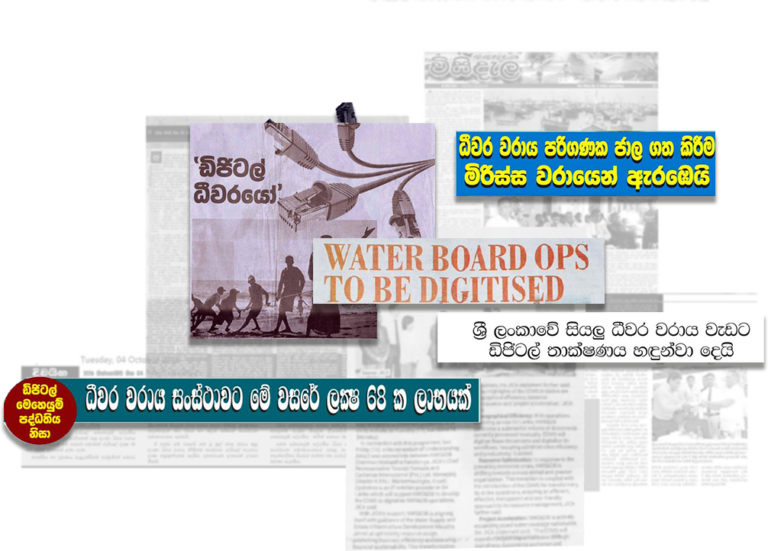
In the national press
Public-sector work covered in national media.
Project milestones and national-level seminars have been reported in the Sri Lankan press.
Public-Sector Solution Capability
Standard Modules Where They Fit. Custom Engineering Where They Don’t.
Government operations rarely fit one software category. We can combine enterprise modules with purpose-built applications around the institution’s actual mandate.
ERP & AdministrationFinance · Procurement · HR · Assets
EDMS & CorrespondenceFiles · Documents · Approvals · Archive
Fleet & Asset OperationsVehicles · Machinery · Maintenance
Inventory & ProcurementPR · RFQ · PO · GRN · Stores
CYCLOMAXPUBLIC
SECTOR
SECTOR
Workflow AutomationRequests · Approvals · Escalations
Public & Stakeholder PortalsApplications · Services · Status
Management IntelligenceDashboards · KPIs · Analytics
Custom Operational SystemsInstitution-specific workflows
Security, Deployment & Integration
Connect What Exists. Control What Matters.
Architecture can be designed around the institution’s security, residency, integration, availability and operational requirements.
Role-Based Security
Permissions by role, department, responsibility, location and approval authority, with audit controls where required.
Data Migration
Legacy assessment, cleaning, mapping, validation, migration, reconciliation and historical-data retention.
Integration
Existing databases, payments, SMS, email, identity, documents, APIs, devices and other approved systems.
Deployment Flexibility
Cloud, on-premise, hybrid or approved local hosting architecture according to project requirements.
Security is designed into the architecture — not added after development.
Implementation Methodology
From Institutional Study to Operational Continuity.
The project does not end when development is complete. Training, acceptance, go-live and long-term operational readiness are built into the implementation path.
01
Understand
Discovery & Process Study
Institution, departments, documents, policies, approvals and pain points.
02
Define
Requirements & Architecture
Functional, technical, security, data and deployment requirements.
03
Build
Design, Development & Integration
Approved workflows, interfaces, integrations and migration preparation.
04
Validate
Testing, UAT & Acceptance
Scenario testing, stakeholder verification and formal acceptance criteria.
05
Prepare People
Training & Change Management
Role-based training, realistic cases, administrators and internal trainers.
06
Operate
Go-Live, Support & Evolution
Launch assistance, warranty, onboarding, enhancements and continuity.
After-Sales & Long-Term Support
Go-Live Is the Beginning of Operations — Not the End of the Project.
Public-sector systems may operate for many years while procedures, staff, integrations and infrastructure continue to change.
Warranty & Helpdesk
Issue resolution, user assistance and agreed post-go-live support.
Refresher & New-Staff Training
Training continuity as officers transfer or join the institution.
Technical & Infrastructure Support
Database, performance, deployment and security assistance.
System Evolution
New workflows, policy changes, integrations and enhancements over time.
“
A government project does not mean developing software and handing it over. The institution must be able to operate it confidently after the project team leaves.
Why Cyclomax
Experience Matters When the System Must Last Beyond the Project.
Since 2005, Cyclomax has built customized business and operational systems around real-world processes. For government work, that same engineering capability is combined with procurement awareness, ownership, training and long-term continuity.
2005Established
20+Years of Implementation Experience
FullLifecycle: Study to Support
FlexibleCloud · Local · On-Premise
Complex Institutions Need Systems Built Around How They Actually Work.
Planning a Public-Sector Digital Project?
Let’s Build the Technology — and the Institutional Readiness Around It.
From tender alignment and process study to development, policy transition, training, deployment, ownership and after-sales support, Cyclomax can help design the implementation around the institution.
Technology is only one part. Let’s discuss the institution, process, people and continuity as well.